Arora Browser Home

Category

Developer Tools & Community

10 articles

The Contributor Pipeline: How Arora Transforms Curious Users Into Browser Maintainers

The Contributor Pipeline: How Arora Transforms Curious Users Into Browser Maintainers

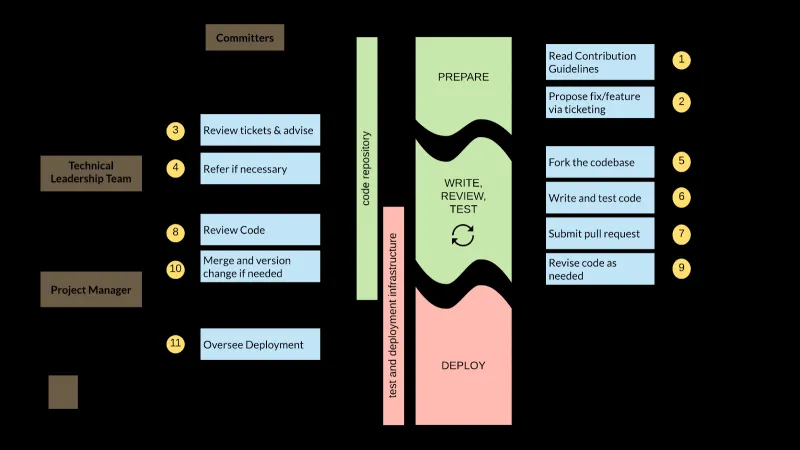
Arora's first-time contributor program is doing something most open-source projects only talk about: systematically converting everyday users into active, skilled maintainers. Through structured mentorship, carefully scoped entry points, and a culture built around lowering friction, the program is scaling faster than conventional community models — and the numbers back it up.

Fragmented by Design: How Conflicting Browser Storage Policies Are Breaking the Web for Developers

Fragmented by Design: How Conflicting Browser Storage Policies Are Breaking the Web for Developers

Browser vendors have quietly diverged on how they handle local storage, cookies, and cache management, leaving developers to navigate an increasingly inconsistent landscape. This fragmentation imposes real costs on teams building cross-browser applications, and the lack of transparency from major vendors only compounds the problem. Arora's commitment to documented, predictable storage behavior offers a different path forward.

Why Most Developers Never Make Their First Browser Commit — And How Arora Is Changing That

Why Most Developers Never Make Their First Browser Commit — And How Arora Is Changing That

Contributing to a browser project sounds like the pinnacle of open-source work — until you actually try it. Arora Browser examines the structural, cultural, and technical barriers that quietly turn away capable developers before they write a single line of code, and explains how deliberate onboarding design is dismantling those obstacles one commit at a time.

Building Tomorrow's Web Today: How Arora Contributors Are Proving Out Standards Before the Committees Catch Up

Web standards don't emerge from committee chambers alone — they're shaped in the trenches by developers willing to ship experimental implementations and collect real-world data. Arora's contributor community has become one of the most active proving grounds for features that eventually find their way into formal W3C specifications, and the engineers driving that work have a lot to say about what the process actually looks like from the inside.

Client-Side Computing Has Arrived: How WebAssembly Is Turning Privacy-First Browsers Into Full Application Platforms

Client-Side Computing Has Arrived: How WebAssembly Is Turning Privacy-First Browsers Into Full Application Platforms

WebAssembly is quietly rewriting the rules of what a browser can do, enabling computation-heavy applications to run entirely on the user's machine without surrendering sensitive data to remote servers. For open-source projects like Arora, this shift toward client-side processing is not merely a technical milestone—it is a philosophical alignment. This piece examines how developers are already building encrypted editors, local inference engines, and privacy-preserving tools on top of the WebAssem

Breaking the Chromium Habit: A Practical Workflow Migration Guide for Developers

Breaking the Chromium Habit: A Practical Workflow Migration Guide for Developers

For many developers, Chromium-based browsers have become so deeply embedded in daily workflow that switching feels less like a product choice and more like a platform migration. This guide addresses the real friction points — DevTools parity, extension dependencies, and debugging compatibility — with honest assessments of where open-source alternatives excel and where trade-offs genuinely exist. The goal is not evangelism but informed professional decision-making.

Reading the Engine Room: A Developer's Practical Guide to Auditing and Contributing to Open-Source Browser Code

Reading the Engine Room: A Developer's Practical Guide to Auditing and Contributing to Open-Source Browser Code

Most developers treat their browser as a black box, yet the same engineers who scrutinize every dependency in their own projects rarely think to examine the software that mediates every HTTP request they make. This guide walks through the architecture of open-source browsers like Arora, explains how to navigate large C++ codebases, and outlines a concrete path toward submitting your first meaningful patch.

Privacy Shouldn't Cost You Your Debugger: The Case for First-Class Developer Tools in Open-Source Browsers

Privacy Shouldn't Cost You Your Debugger: The Case for First-Class Developer Tools in Open-Source Browsers

Privacy-first browsers have earned their reputation for protecting users—but they have also earned a quieter reputation for making developers' lives harder. Network inspection limitations, restricted APIs, and stripped-down DevTools create real friction for developers who care about both privacy and professional capability. This piece argues that the tension between privacy and developer experience is a false dilemma, and that open-source browsers are uniquely positioned to resolve it.

5 Features That Developers Fought For and Won: The Open-Source Browser Contributions That Changed Everything

5 Features That Developers Fought For and Won: The Open-Source Browser Contributions That Changed Everything

Open-source browsers evolve on a fundamentally different timeline than proprietary ones — driven by GitHub issues, community pull requests, and developer frustration rather than product roadmaps and quarterly earnings targets. These five features, each born from community demand, illustrate why investing time in open-source browser projects pays dividends that no corporate release cycle can replicate.